1.- Comprehensive overview of the project
The MINE-TO-H2 project is a large-scale demonstration initiative that aims to repurpose the former underground coal mine “Pozo Fondón” (Langreo, Asturias, Spain) into a hub for sustainable hydrogen production and use. By integrating green hydrogen production, renewable energy generation, and heating sector applications, the project contributes directly to the European Green Deal and the objectives of the RFCS Just Transition program.
A 2.5 MW green hydrogen plant—scalable to 5 MW—will be installed, using electrolysis of mine water powered by electricity from a new photovoltaic installation on a former open-pit coal mine and additional renewable sources via a Power Purchase Agreement (PPA). The hydrogen will be stored in 500-bar cylinders and transported via virtual pipeline to a newly built 350-bar refuelling station for intercity buses. Demonstration in real operational conditions will be carried out using hydrogen-powered buses to
connect the major cities of Asturias: Oviedo, Gijón and Avilés.
In a novel integration of energy systems, the project also connects the hydrogen plant to the existing geothermal district heating at Pozo Fondón. The electrolyser’s waste heat will be recovered through water cooling and fed into the geothermal loop, significantly improving system efficiency and reducing energy consumption.
D7.6 Comprehensive overview of the project
2.- Peliminary installation project and executive project
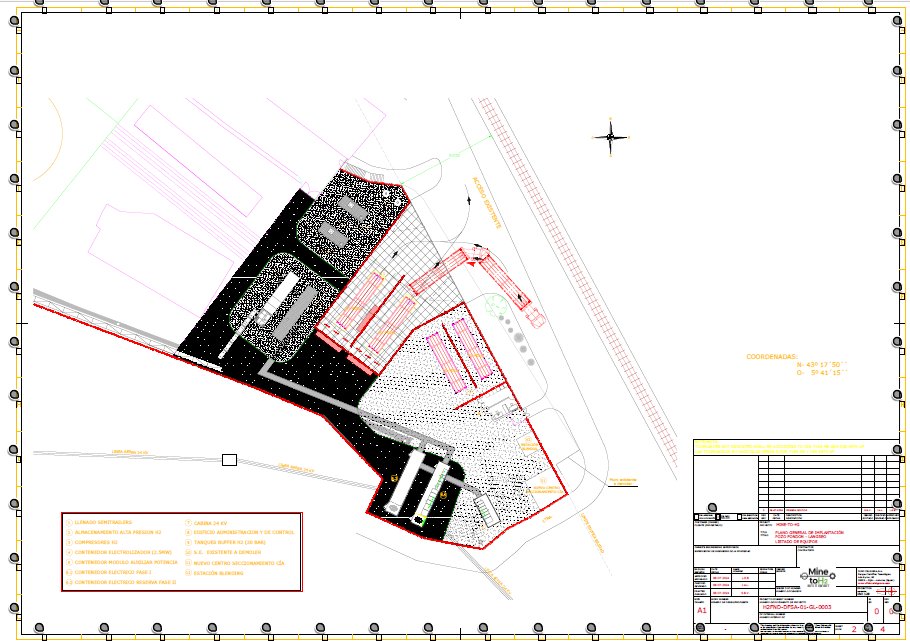
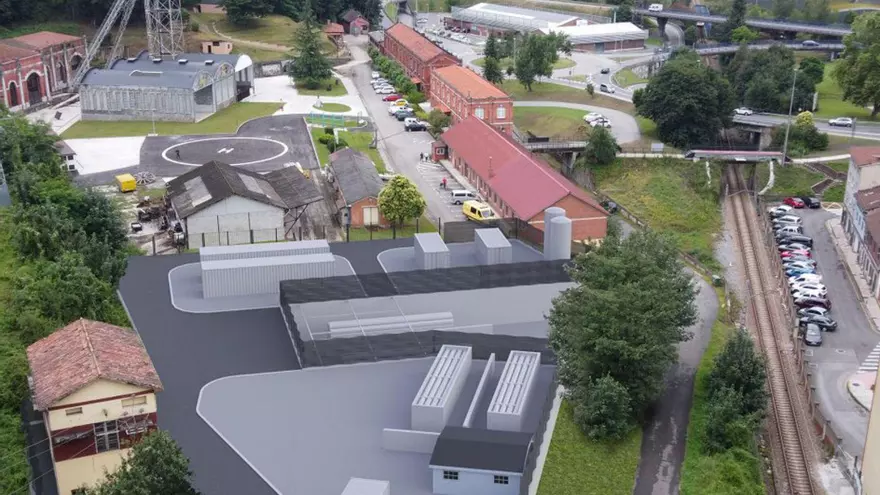
At this preliminary design stage, this work assesses the feasibility of accommodating the hydrogen (H₂) production, compression and refuelling plant within the existing facilities at Fondón Mine Shaft (Pozo Fondón), ensuring compatibility with the existing infrastructure. It also examines the integration of mine water as a resource and the interconnection with the existing district heating network. This preliminary assessment will provide the basis for optimising the proposed solution during the subsequent engineering design phases.
The strategy of utilising local resources, such as mine water and the existing district heating network, promotes the principles of the circular economy. Nevertheless, the operational flows of the main systems, including mine water, demineralised water, hydrogen, the electrolyser cooling system and heat exchange with the district heating network, will be further optimised during the detailed engineering design phase.
Preliminary installation Project started from the current conceptual design. It allowed the development of engineering documents needed as a Pre-FEED (Preliminary front-end engineering and design) scope to consolidate the main design, integrating a new use of Green Hydrogen Production Plant. Also adding the re-use of existing resources as the mine water, the use for optimization of the solution with existing District heating from the mine’s geothermal source of heat, and to take advantage of most of the existing area in the former coal pit mine with their existing utilities already in place.
This first design, starting from conceptual purposes, defines as preliminary the functional description of the plant, including:
- Definition of the Site conditions, their area availability considering urbanistic conditions, and the existing environmental conditions.
- Identification of the existing conditions, including assessment, and collection of topographical surveys available for the area.
- Collection of geotechnical studies, and their compatibility for the development and identification of needs for new surveys.
- Pre-design for the Hydrogen production plant.
- Development of risk mitigation preliminary plan and establishment of Basis for the next phase design (Basic engineering – FEED).
The information obtained from this phase has been used to start the Environmental acceptance process.